Sheriff in Mafia: what the role does
The sheriff is the town’s one source of hard facts: a single red player who, from the second night, checks somebody and learns which side that player is on. Everything else at the table is a reading of a person; a check is a fact the game handed somebody.
What the sheriff does at night
On the first night the sheriff only signals their role to the host. From the second night, once a night, the sheriff points to one player and learns which side that player plays for. That is all the sheriff ever learns: one word about one seat. Nobody at the table is ever handed a list, so the sheriff has to decide when the word is worth spending.
When the sheriff speaks
A sheriff who speaks at the wrong moment wastes a real check: too early, and the check has not helped the town yet; too late, and the room hears a story instead of a fact. When two players claim the badge, one of them is lying, and the room has to decide which.
Free lesson: What each card can actually do
So take one night. The sheriff checks seat five and hears "town", while the leader checks seat five and hears "not the sheriff". Both of them learned something real, but neither learned who anybody else is. Beginners expect a third source of truth and spend the evening waiting for it. There is none, because the sheriff gets one word about a side, the leader gets a yes or a no about one seat, and nobody at any point is handed a list.
Free lesson: what to do with a sheriff claim nobody has challenged, and how a second claim changes the count.
- What each card can actually do
- A sheriff claim nobody has challenged
- A second sheriff claim — one of the two is lying
The hand sign
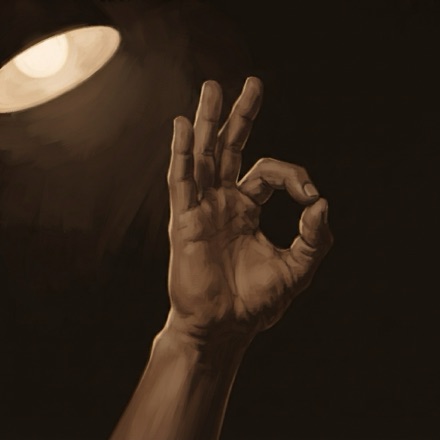
The sheriff’s sign is a ring made with the thumb and the index finger. A sheriff who decides to come out often shows the sign as well as saying the word, because a claim the room can see is harder to talk over than one it has to remember.
Clubs share this sign as a habit; it is not in the rulebook, so ask your host which set your room uses.