Free · the language of the room

The hand signs of a mafia table

A real table talks with its hands as much as its mouth. None of it is decoration — it is how you say something without spending your minute.

These are for the table you sit at with people. Nothing on this page is a control in the game — you will not press any of it here.

The four cards

What you are — the club sign for civilian, sheriff, mafia and don.

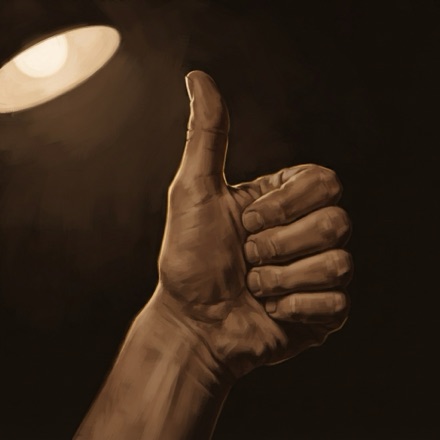
Civilian

a thumb up

The commonest card and the one nobody shows on purpose. If you are holding it you have no secret to protect — which is exactly why a civilian who behaves like they are hiding something is the most expensive misread at the table.

At a real table This is the card, not a signal. You will never flash it during a game; you see it at the reveal, and you count how many of them the town spent.
Sheriff

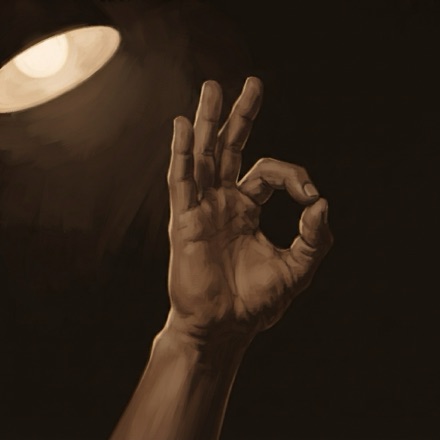
a ring made with thumb and index finger

One check a night, and the only hard fact the town ever gets. Everything else at the table is a reading of a person; this is a fact the game handed somebody.

At a real table A sheriff who has decided to come out shows the badge rather than only saying it. A claim you can SEE is harder to talk over than one you have to remember hearing.

Mafia

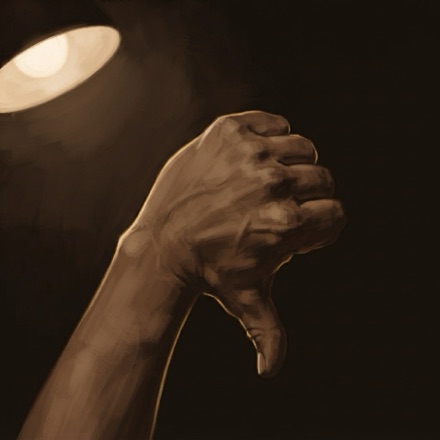
a thumb down

Two of them, and they know each other from the first second. Everything a mafioso says is written by somebody who already knows every answer.

At a real table The gesture belongs to the night. It is how the team confirms a target without a word, and it is why a real table plays with eyes closed rather than trusting people not to look.

Don

the thumb touching the ring finger

The third black card, and not a second sheriff. He checks one player a night and learns exactly one thing: is this the sheriff. He already knows his own two partners, so six of his seven possible answers are worth nothing at all.

At a real table He is also the best false sheriff at the table, and the reason is mechanical rather than stylistic. He has been checking people all game, so he can name WHO and on WHICH night without inventing a history that contradicts itself.

What the rulebook actually fixes

Every sign above this line is a club's own habit — real, and worth learning, but written down nowhere. §9.1 says plainly that the gestures given in the rules are the only official ones, and this short list is that whole thing, word for word.

The don identifies himself, once. On the first night the don shows his own team who he is, by gesture, and sets the order later shots will follow — the black team gets exactly one minute for this, and it happens once, ever. FIIM §4.2.1

The mafia's shot is a finger-gun. Every night after the first, the black team shoots with their eyes closed — a raised hand shaped like a gun, aimed the instant the judge calls that seat's number out loud. Point at different seats and dawn brings nobody. FIIM §4.5.3

The judge answers a night check with one of four gestures, and never a fifth:

Sheriff checked red — a head turn, thumb up §9.2
Sheriff checked black — a nod, thumb down §9.3
Don guessed right — a nod, no thumb §9.4
Don guessed wrong — a head turn, no thumb §9.5

Some clubs use a shoulder-touch for the sheriff's card instead of the ring shown above — ask your own table which one they use.

Counting the seats

A number held up nominates, counts a vote, or answers “who?” while somebody else is still talking.

⚠️ Six through ten need two hands. The left one always shows five; only the right one counts, and ten is both palms. There is no one-handed six in the counting most rooms use, and inventing one gives you a sign nobody reads back.

The rulebook itself only ever says a check is "shown with fingers" — it never fixes the shape below. The five-then-two-hands split is a club convention, not a rulebook citation. FIIM §4.5.6 · §4.5.7 — the mechanic. The shape itself: no published source we link to.

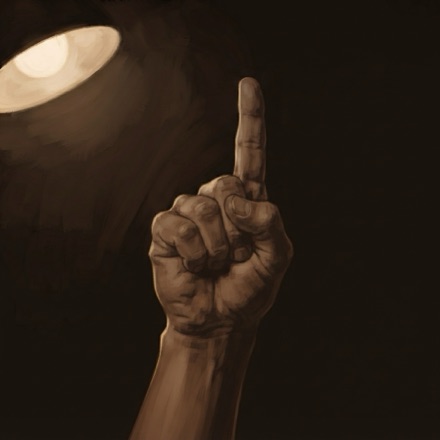
Seat 1

one finger, palm out

Nominating seat 1, or answering a question about it.

At a real table Show it at chest height, held still. A number waved about is a number somebody has to ask you to repeat.

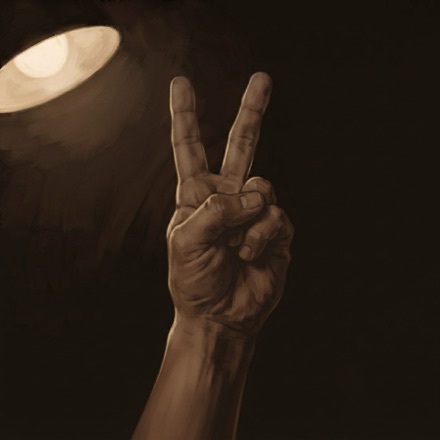
Seat 2

two fingers

Two seats, two votes, two nights — the count is whatever the room is counting.

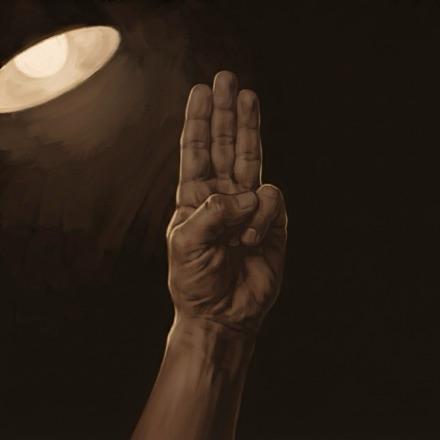
Seat 3

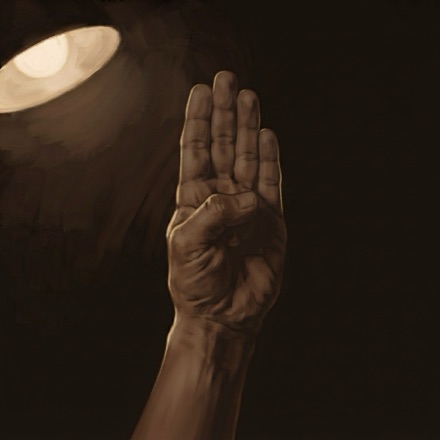
three fingers

By day three this is usually a vote count, and vote counts decide games.

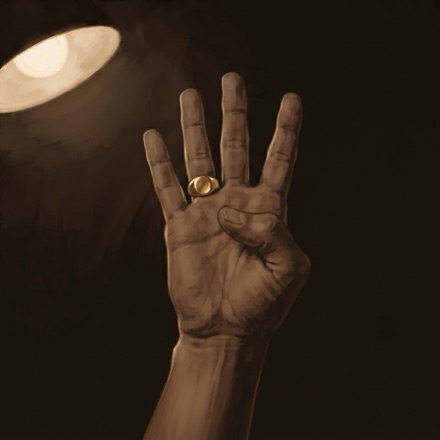
Seat 4

four fingers, thumb folded

Also the number that matters most at ten seats: four reds lost and the mafia have parity.

Seat 5

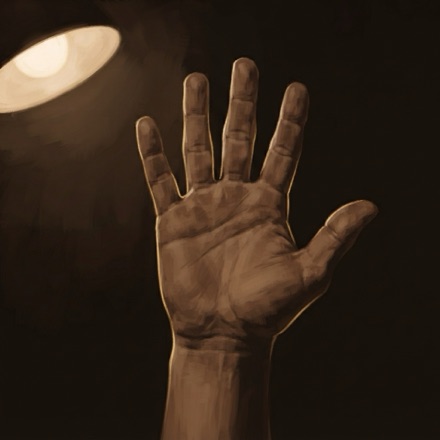
an open palm

Five is the hinge. Five alive means the next vote is the game.

Seat 6

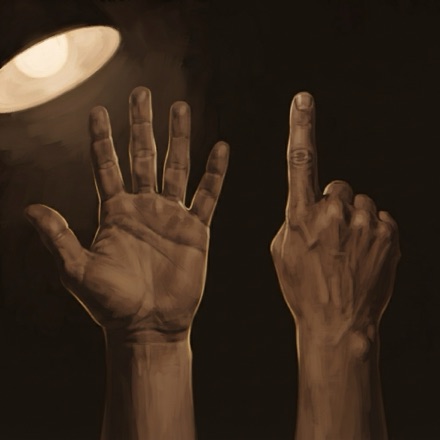
an open palm and one finger

Nominating seat 6, or answering a question about it.

Seat 7

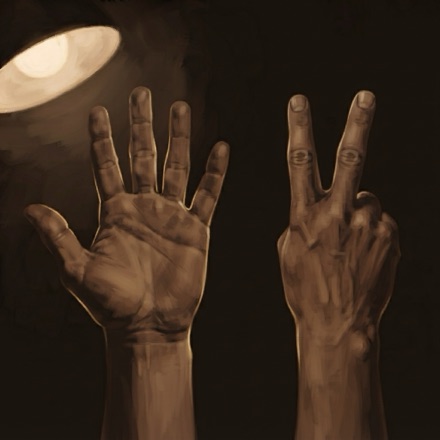
an open palm and two fingers

Left hand always shows five. Only the right hand counts.

Seat 8

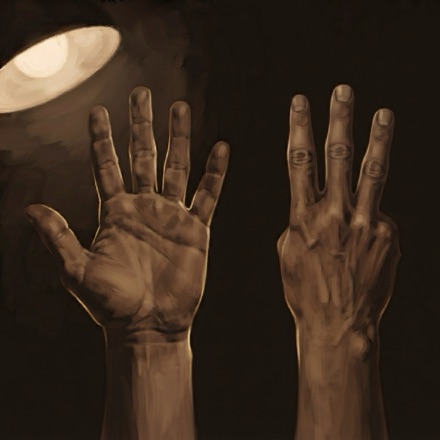
an open palm and three fingers

Five on the open hand, three on the other. From six upward every number is two hands, and the open palm is always the one that means five.

Seat 9

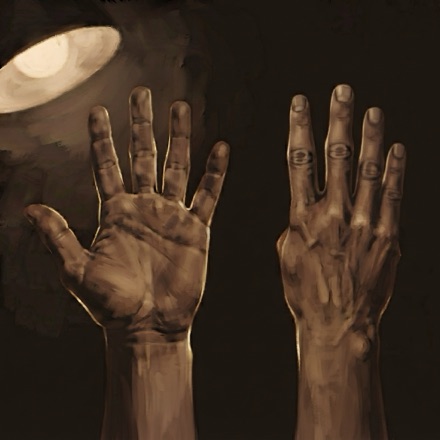
an open palm and four fingers

Nine is the last number that still uses an open palm and a count beside it.

At a real table Four fingers held together read faster than four fingers spread — at a distance, spread fingers are counted twice.

Seat 10

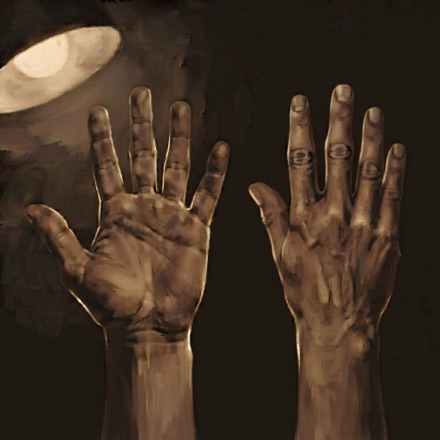
two open palms

Ten is the only number shown as two of the same thing, which is exactly why nobody misreads it.

At a real table Both palms, both still, both at chest height. It is the one seat number a room never asks you to repeat.

Some clubs use a closed fist for seat ten instead of the two open palms shown above — unconfirmed either way, so ask your own table which one they use before your first night.